
7,258,491 hotelsin 60 categories

Times Square is one of the world's most visited attractions, drawing tens of millions of visitors a year, and it is the one spot in New York many locals go out of their way to avoid. That tension tells you most of what you need to know: go once, go deliberately, and go at the right hour, and you get the spectacle without paying the trap tax.
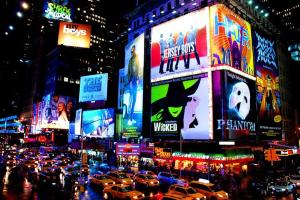
We at Travelmyth, the hotel search engine that ranks stays by your interests and needs across 60 stay categories, put this guide together to answer the honest question: what is actually worth your time here, and what should you walk past? Times Square is centered on the junction of Broadway and Seventh Avenue and extends from 42nd to 47th Street, at the heart of the Theater District. It is a companion to our wider guide to things to do in New York City.

A few things earn the trip. The first is the light itself: Times Square is brightly and incessantly illuminated by digital billboards, and standing under them at full blast is the whole point of coming. The second is Broadway. At Father Duffy Square, the TKTS booth, run by the nonprofit Theatre Development Fund, sits beneath the red steps and sells same-day Broadway, Off-Broadway and dance tickets at 20 to 50 percent off regular prices. The steps themselves double as one of the best free seats for people-watching. Beyond that, it is flagship stores and pure spectacle; the square earns its nickname, the "Crossroads of the World," on sensory overload alone.

Times Square is a genuinely different place after dark. By day it reads as a busy, slightly grubby intersection; at night the billboards do their work and the whole square lights up, which is when the spectacle actually delivers. If you only stop once, stop after sunset. The pedestrian plazas, created in 2009 when the traffic lanes along Broadway from 42nd to 47th Street were closed to cars, give you room to stand and look up without dodging traffic.
The honest part. The costumed characters and painted performers who pose for photos usually expect a tip, so clarify the amount before taking a photo or keep walking. The chain restaurants right on the square trade location for quality and price; eat a block or two away instead. And you do not need to buy anything to enjoy the square. The show is free, so treat the hard-sell stalls the same way you treat the characters.
Times Square is the front door to the Theater District, where most of Broadway's theaters are clustered. One of the easiest legitimate ways into a discounted show is the TKTS booth on the red steps, which discounts same-day tickets by 20 to 50 percent; check the live listings and buy when a show you want appears, as availability changes throughout the day. It turns a walk through the square into a night at the theater without the full-price sting.

The ball drop is the square’s most famous New Year’s Eve tradition: it began on December 31, 1907, and still draws hundreds of thousands of people to Times Square, with a global audience watching from afar. It is worth knowing what that actually means before you plan around it: hours of standing in a controlled viewing area in the cold, with no portable restrooms, after arriving in the afternoon. For most travelers, it is better watched on a screen than experienced in person; the square is more enjoyable on almost any other night.
Treat Times Square as a 30-to-60-minute stop, not a destination for the day. After dark is best for the lights; weekday evenings are marginally calmer than weekends. It is worth doing once for the sheer scale of it, but the reward curve is steep and short, so see it, feel it, photograph it, and move on to the neighborhoods that reward a longer stay.
A Times Square hotel is a real trade-off: you are steps from the theaters and the lights, but you also live with the noise, the crowds and higher prices. Staying a few blocks away in Midtown keeps the access and drops the intensity. On Travelmyth you can filter New York stays by the features that matter to you, such as a boutique-style property, a skyscraper stay, or a rooftop pool, and combine two of those filters at once to narrow the long list to the handful that fit how you travel.